Most cold emails fail before the offer is ever considered. The customer is already translating every familiar sales phrase into what it really asks them to do: trust a stranger, surrender their time and pretend generic outreach feels personal.
The sender may see professional persistence. The customer sees automation, manufactured urgency and a calendar ambush wearing business casual.
Here are 10 common cold-email lines that don’t work, what customers actually hear and why each one pushes the sale further away.
The cats translated them because apparently someone had to.
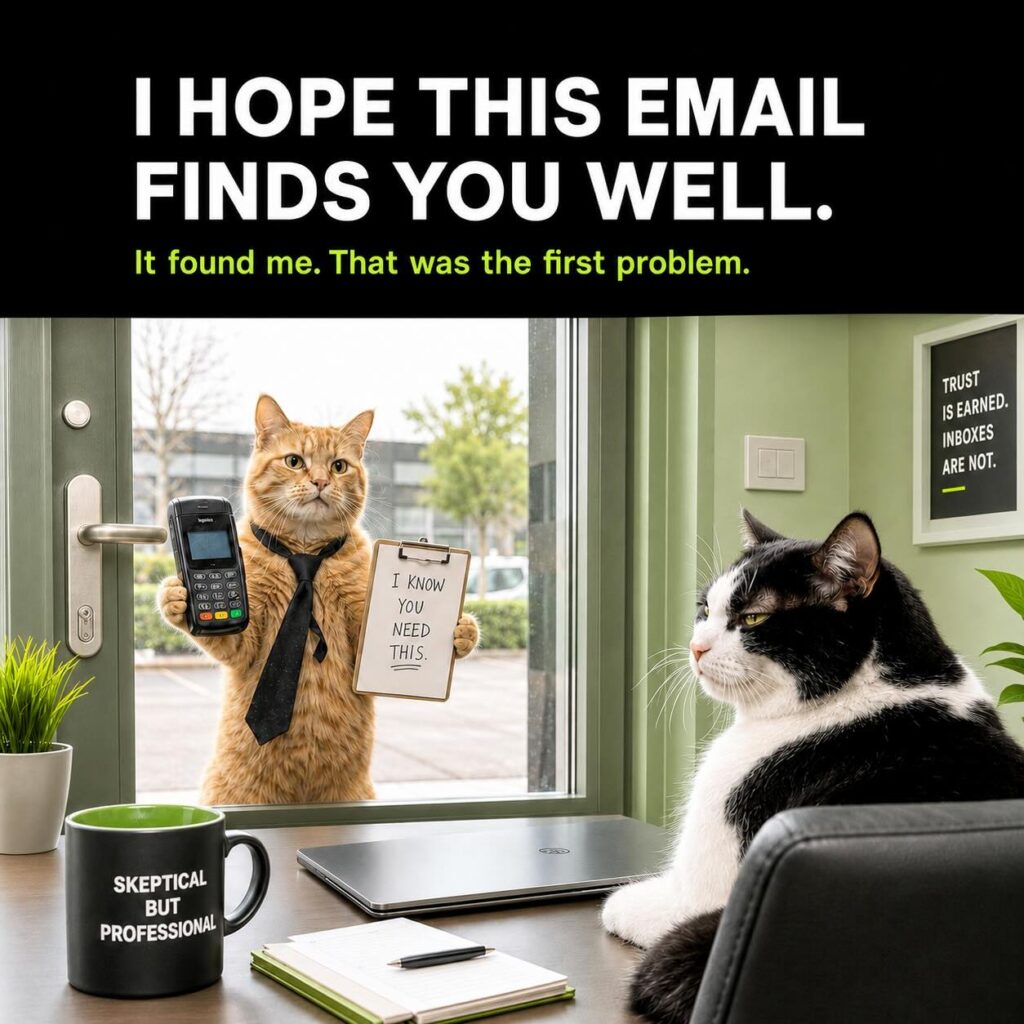
Cold emails almost always fail from the first line. Why? Because it isn’t about the customer and you are a random stranger that has built zero trust or interest.
While you may have written I hope this email finds you well…
It is read as
I hope this email finds you at complete desperation with a credit card already out and ready to buy anything just to feel alive.
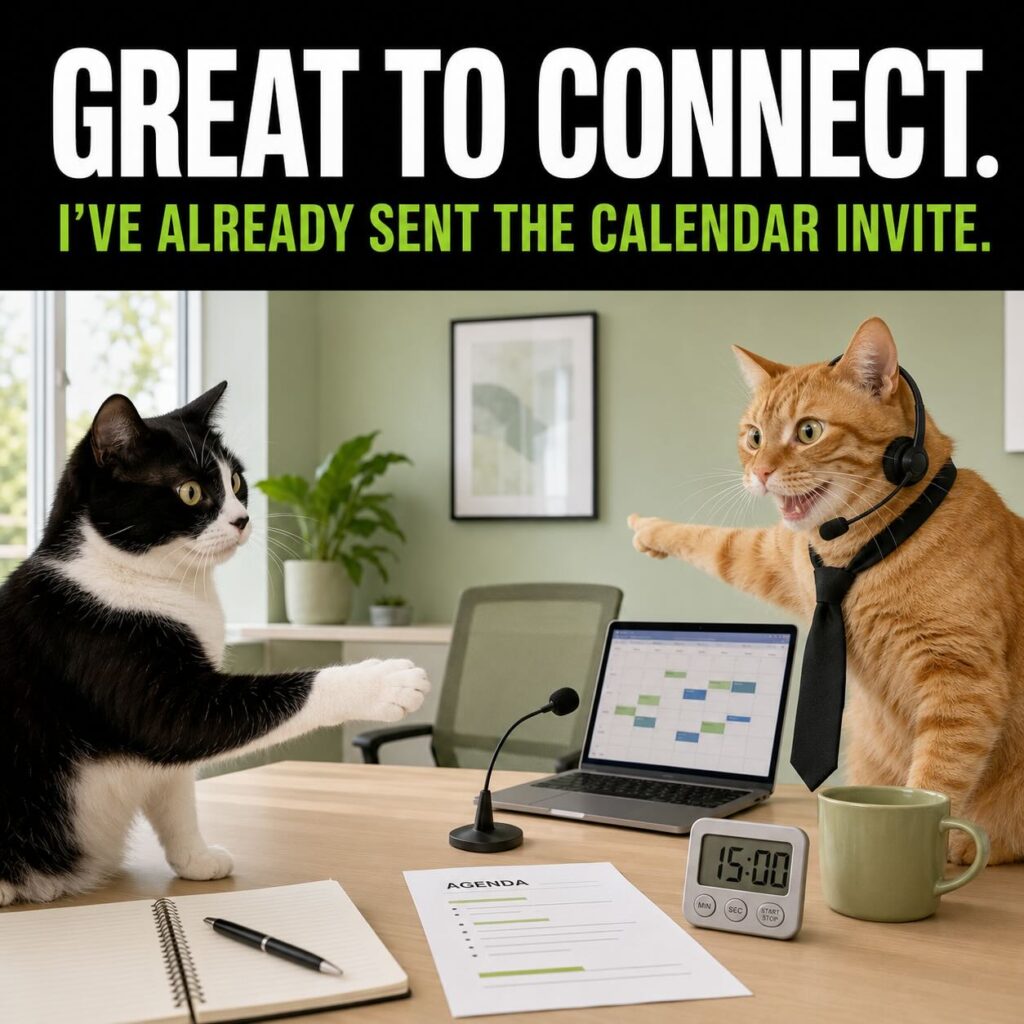
New LinkedIn connections almost always fail with the second message. Why? Because we connected 14 seconds ago, and you’re already trying to put a meeting on my calendar.
While you may have written…
Would you be open to a quick 15-minute chat next week?
It is read as…
Thank you for accepting my completely context-free connection request. Please now surrender 15 minutes so I can discover—live and at your expense—why I contacted you.
Even cats sniff each other before scheduling a discovery call.
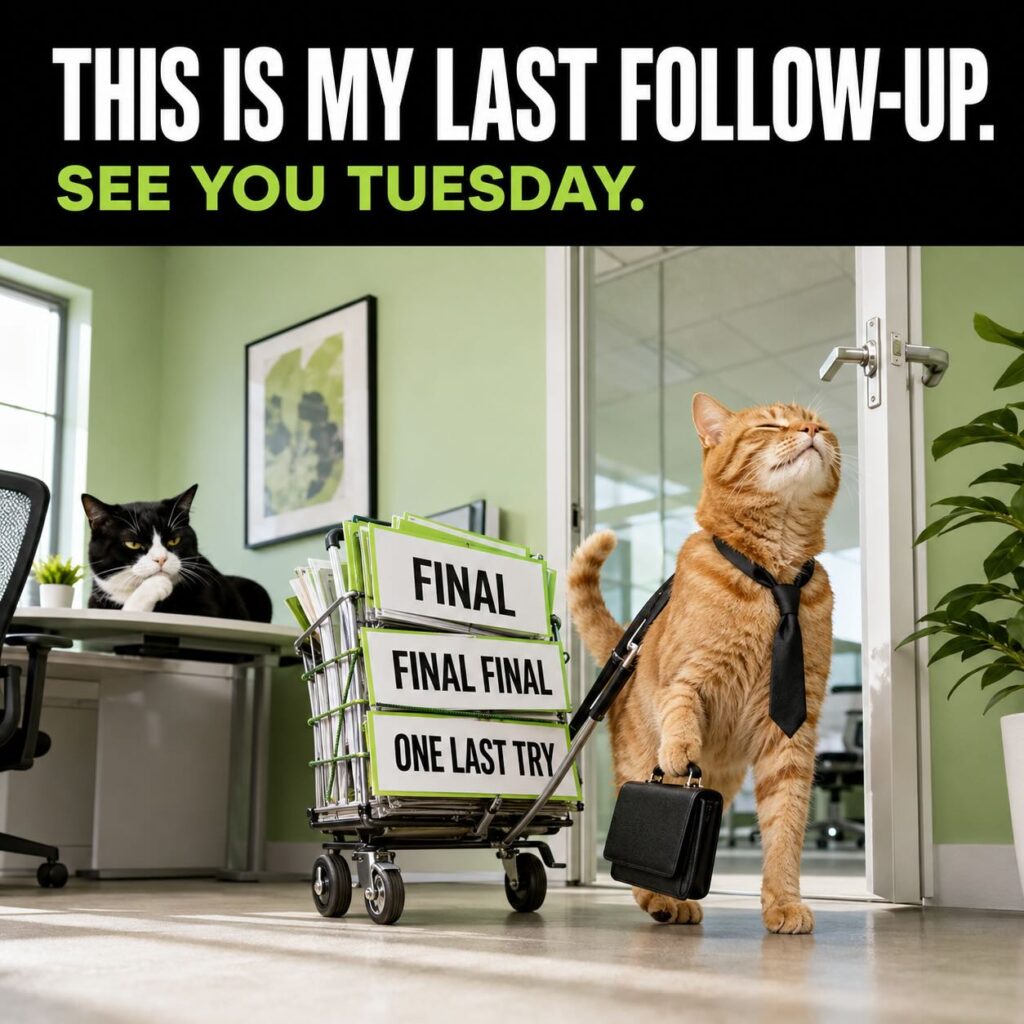
Salespeople love announcing their “last follow-up” because apparently an unanswered email needs a season finale.
While you may have written…
This is my last follow-up. If I don’t hear back, I’ll close the file.
It is read as…
This is my fourth last follow-up. I will now disappear forever—or until Tuesday morning, when I return with “Just bumping this up.”
Cats have nine lives.
Some sales emails have twelve finales.
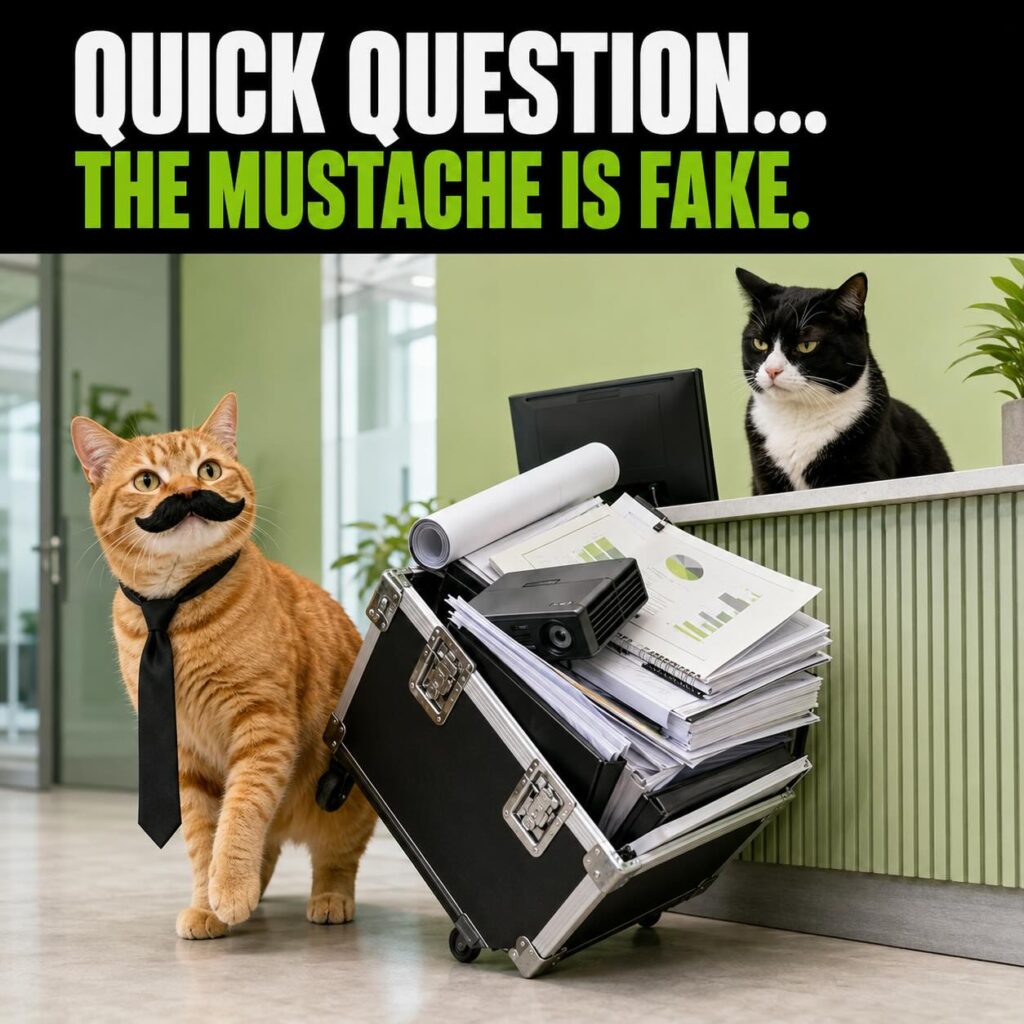
Sales messages love opening with “Quick question…” because “I’m about to make this entirely about me” apparently tested poorly.
While you may have written…
Quick question—would improving your sales pipeline be a priority this quarter?
It is read as…
A full sales pitch has entered the building wearing a fake mustache. It brought a case study, a calendar link and absolutely no intention of being quick.
Even cats are more honest.
When they want something, they start screaming.

Salespeople love “bumping” an email as though your inbox were a physical pile and their message deserves the penthouse.
While you may have written…
Just bumping this to the top of your inbox.
It is read as…
You ignored this once, so I have moved it closer to your face. Perhaps proximity will create value.
Cats use the same strategy.
They move from the floor to your desk and finally sit directly on the keyboard.
At least the cat usually has a reason.
Salespeople ask “Did you see my previous email?” as though delivery confirmation creates an obligation to care.
While you may have written…
Just checking to see whether you saw my previous email.
It is read as…
Yes. I saw it. Ignoring it was not a technical malfunction.
Cats don’t ask whether you saw them.
They sit directly on your keyboard until the question becomes unnecessary.

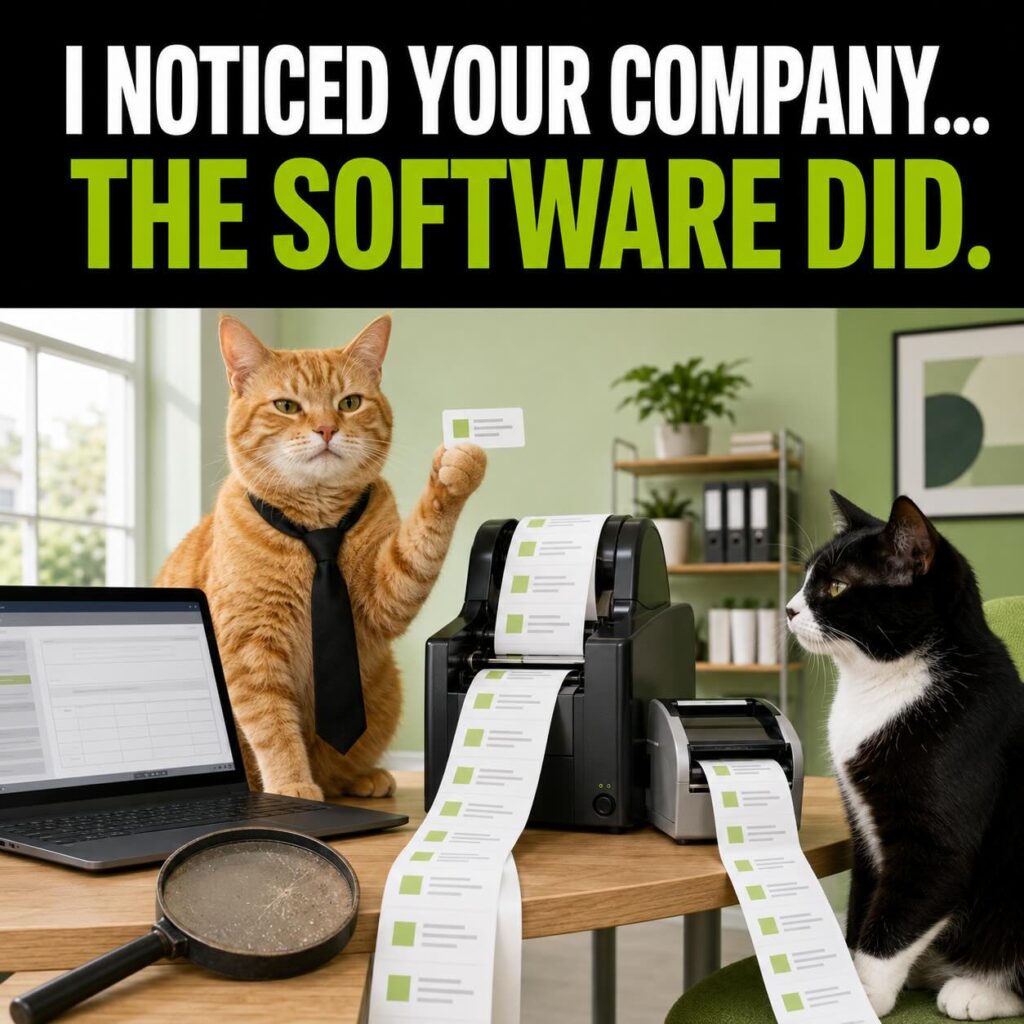
Sales automation loves “I noticed your company” because apparently locating a company name now qualifies as research.
While you may have written…
I noticed your company is doing some interesting work.
It is read as…
My software successfully located your company name and inserted it into a sentence I sent to 800 people.
Cats conduct more research before choosing a cardboard box.
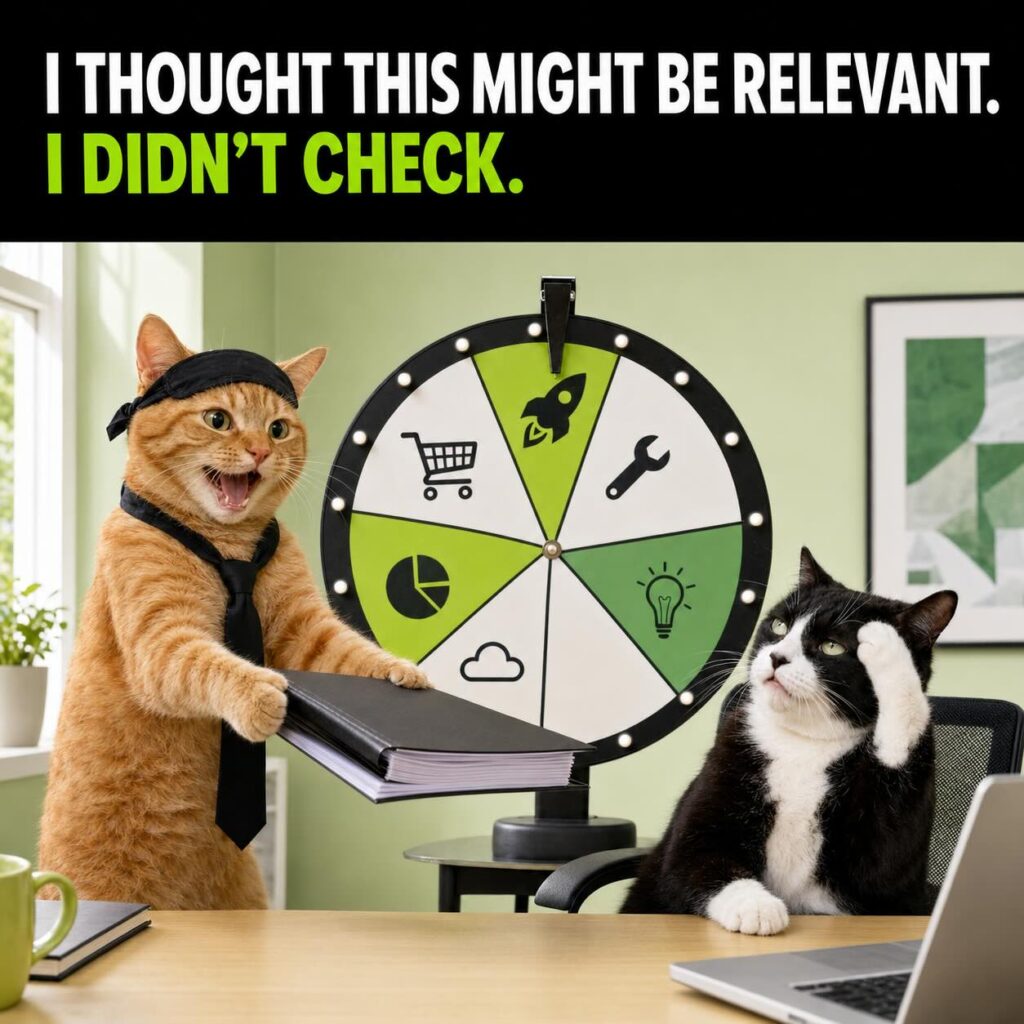
“I thought this might be relevant” is a polite way of admitting that relevance was never verified.
While you may have written…
I thought this might be relevant to your team.
It is read as…
I selected a generic business problem, attached a proposal and spun the wheel.
Cats inspect an empty box for five minutes before climbing inside.
That is more due diligence.
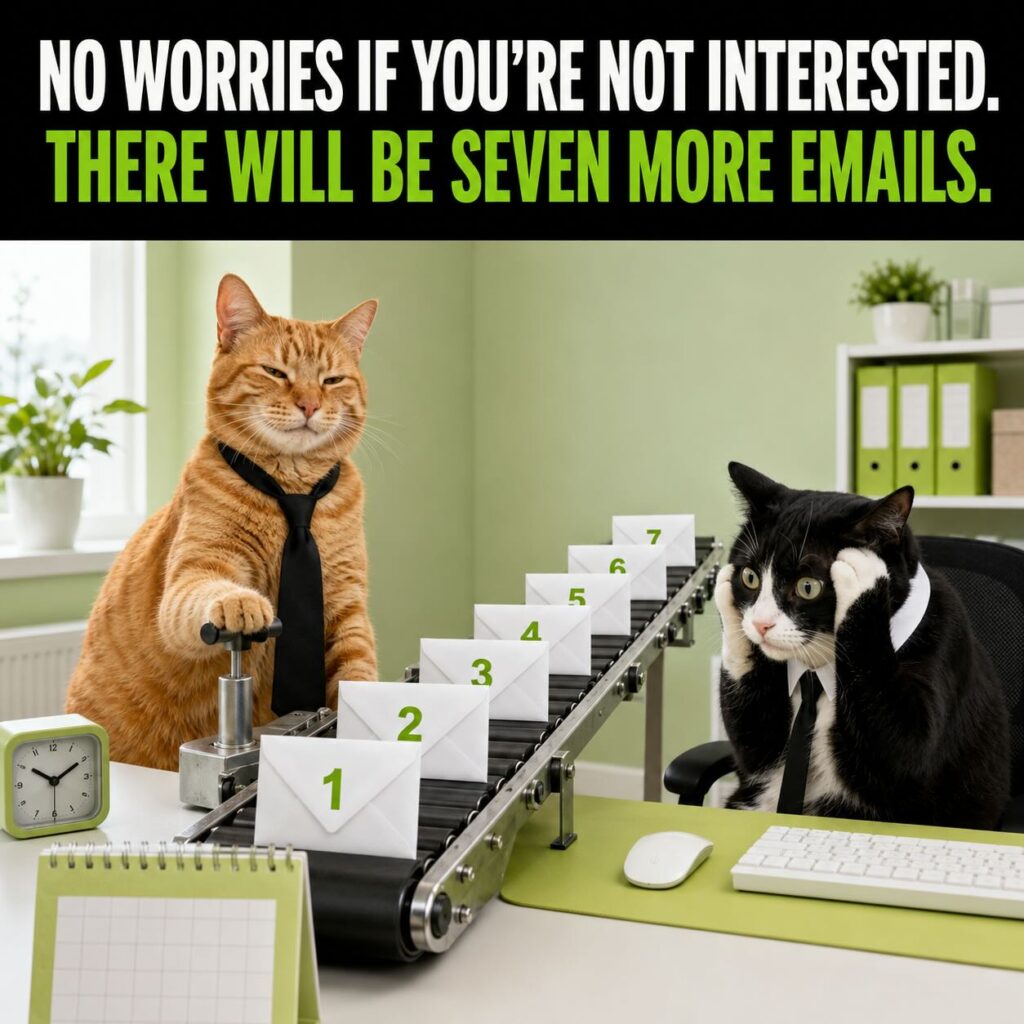
“No worries if you’re not interested” rarely means there will be no worries.
While you may have written…
No worries if you’re not interested.
It is read as…
There will be worries. I have seven more emails scheduled, and each has been instructed to sound increasingly casual.
When cats pretend not to care, they at least knock something off your desk and leave.
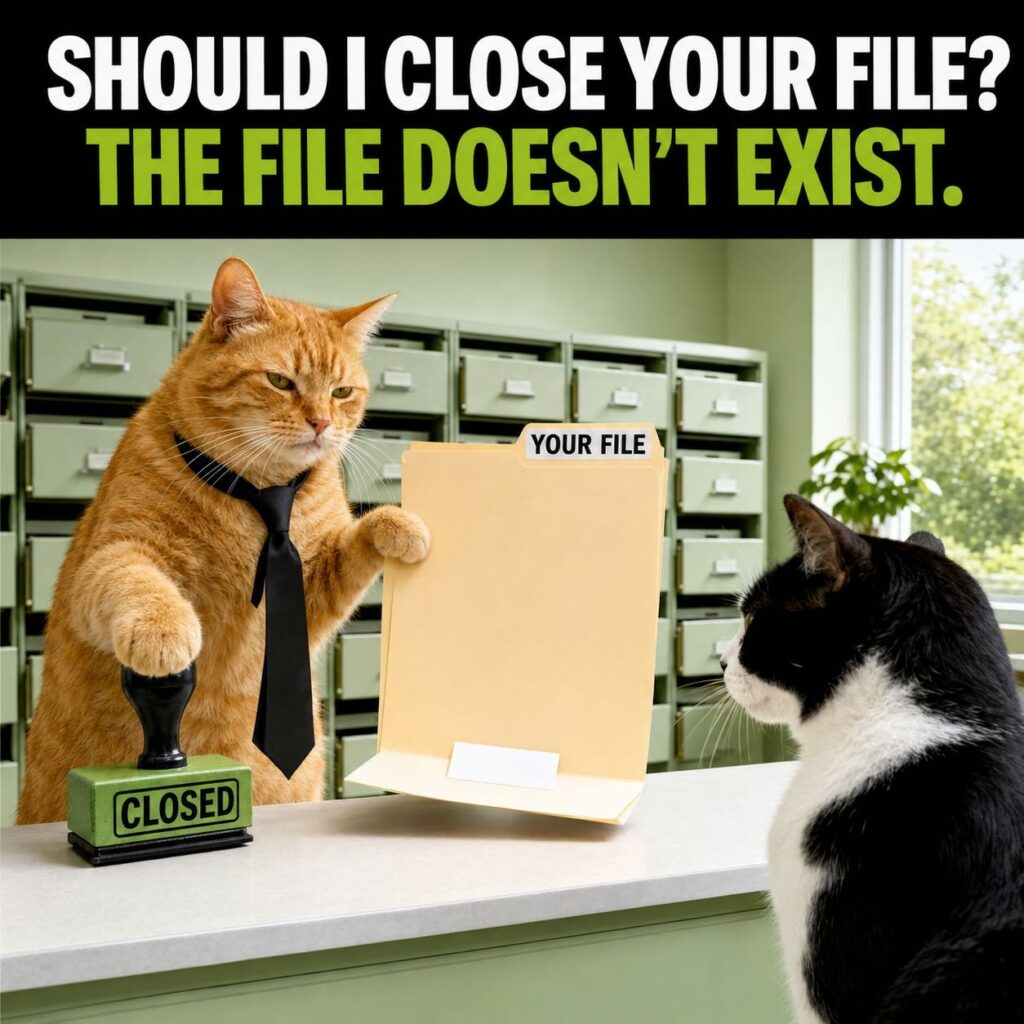
The fake breakup email tries to create urgency by threatening an administrative consequence that exists entirely inside the salesperson’s imagination.
While you may have written…
Should I close your file?
It is read as…
Please react to this imaginary administrative consequence before I stamp a folder containing nothing but your first name and my optimism.
Cats know empty folders are for sitting in.
Not leverage.