
If you are looking for sales tips, this is going to be a disappointing website.
These are opinion pieces about sales, customers, margins, and the strange ways business owners are encouraged to confuse activity with progress. You may agree. You may disagree. Either is useful.
The goal is not to give you a checklist. The goal is to show you how 50 Cats thinks.
If that thinking helps you see money, customers, or opportunities your business has been missing, then we should probably have a deeper conversation. And if that conversation creates value, 50 Cats expects treats.
Radical, I know.
If transactions aren’t sales, what are they?

A transaction is not a sale.
That sounds obvious until you see how many tools, dashboards, funnels, platforms, consultants, and mildly confident people in quarter-zips call themselves “sales automation.”
A transaction means something moved into the business system. An order was placed. A payment was made. A purchase order was given. An invoice can now exist without everyone staring at each other like raccoons in a conference room.
That matters.
Transactions should be clean. Transactions should be accurate. Transactions should often be automated.
But transactions are not sales.
They are the beginning of a different process.
A transaction starts the accounting process
Once a transaction happens, the business has entered accounting, bookkeeping, fulfillment, and records.
That is where automation can do very useful work.
It can create the invoice. Send the receipt. Record the payment. Update the customer file. Trigger fulfillment. Notify the right people. Feed the bookkeeping system. Help the owner see what happened without needing a detective, a whiteboard, and three half-empty coffees.
Good. Automate that.
A business should not have to manually chase every receipt like it is an escaped zoo animal.
But let’s be clear about what that automation is doing.
It is not creating the sale.
It is processing what happened after the customer decided.
That is a very different job.
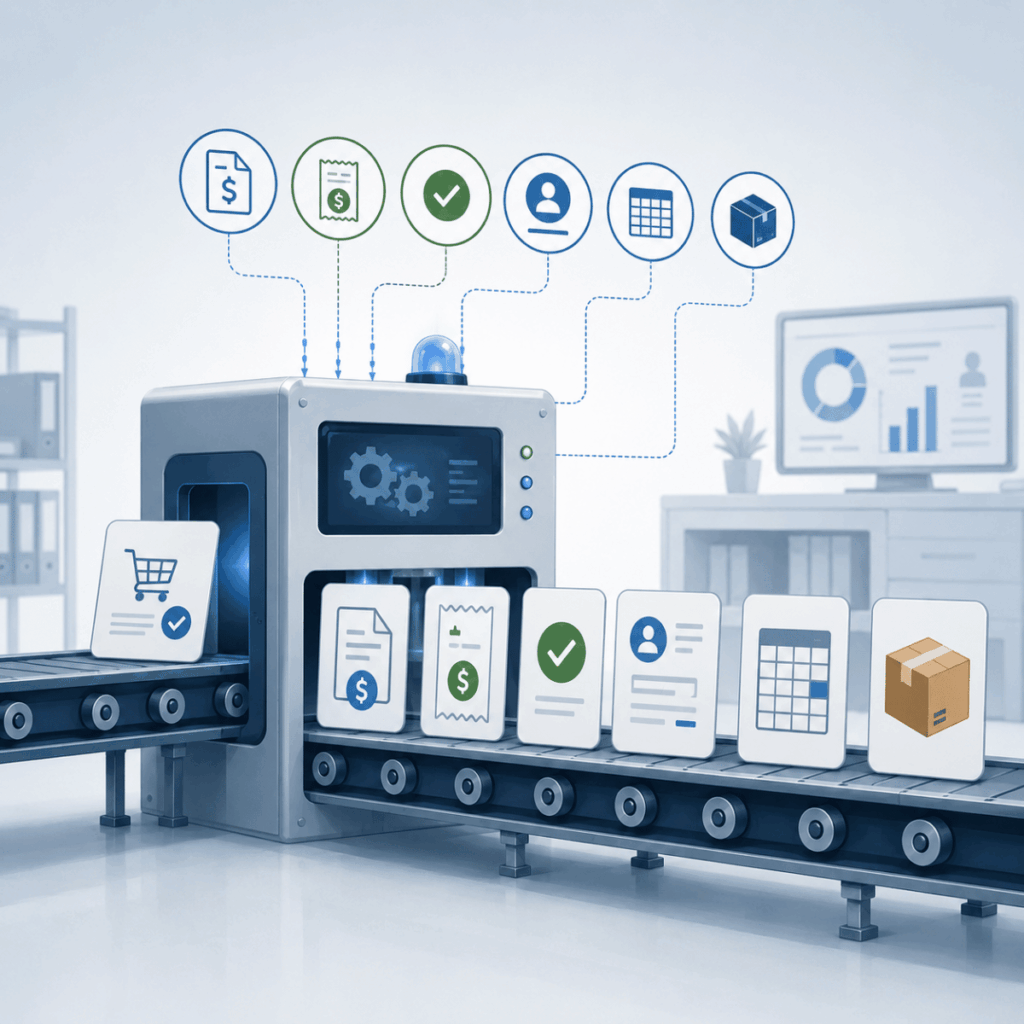

Sales happens before the transaction
Sales is the work before the transaction.
It is the judgment, timing, positioning, listening, explaining, qualifying, and deciding that happens before money moves or paperwork begins.
Sales is not just “can we get someone to buy?”
That is the children’s menu version of sales.
Real sales asks better questions.
Is this the right customer? Do they understand the value? Are they buying for the right reason? Can we serve them well? Are the margins healthy? Will this customer create repeat business or create a small weather system of chaos over the company? Should we even want this work?
That last question is where a lot of owners get quiet, because it is uncomfortable.
But it is also where sales becomes a business function instead of a confidence trick with a payment link.
The wrong customer can still complete a perfect transaction
This is the part automation does not like to talk about.
A bad customer can still complete a transaction.
They can fill out the form beautifully. They can approve the quote. They can pay the deposit. They can sign the agreement. They can produce a perfect little transaction record that looks lovely in the system.
And then they can proceed to eat your margin, drain your staff, change the scope, ignore the process, demand exceptions, and somehow make everyone in the business feel like they are trapped in a group project from hell.
The system says: order confirmed.
The owner still has to ask: should we have wanted this order?
That is sales judgment.
No invoice automation is going to save you from admitting the wrong customer into the business with a fruit basket and a login.


Automation makes the visible part look like the whole thing
This is why the confusion is getting worse.
The transaction layer is visible. It produces records. It creates dashboards. It gives people numbers to point at during meetings so nobody has to make eye contact with the real problem.
Sales is harder to see.
Sales includes the conversations that did not happen. The customer you chose not to pursue. The discount you refused. The bad-fit lead you stopped chasing. The margin you protected. The capacity you did not waste.
Those decisions do not always show up as exciting little bars on a dashboard.
But they matter.
Automation is very good at making activity look organized. That is useful when the activity is useful.
But organized activity is not the same as sales progress.
A treadmill also tracks movement. It does not mean you went anywhere. It means you paid money to walk indoors while a screen judged you.
Automate the transaction layer
The transaction layer should be automated wherever it makes sense.
Automate invoices. Automate receipts. Automate payment reminders. Automate subscription renewals. Automate bookkeeping entries. Automate fulfillment handoffs. Automate reporting. Automate the parts where accuracy, speed, and consistency matter more than human interpretation.
That is not controversial. That is just running a cleaner business.
Nobody needs a heroic manual process for sending a receipt. There is no competitive advantage in making bookkeeping feel like archaeology.
Use the tools.
Just call them what they are.
They are transaction tools. Accounting tools. Bookkeeping tools. Operational tools. Administrative tools.
Useful? Yes.
Sales? No.
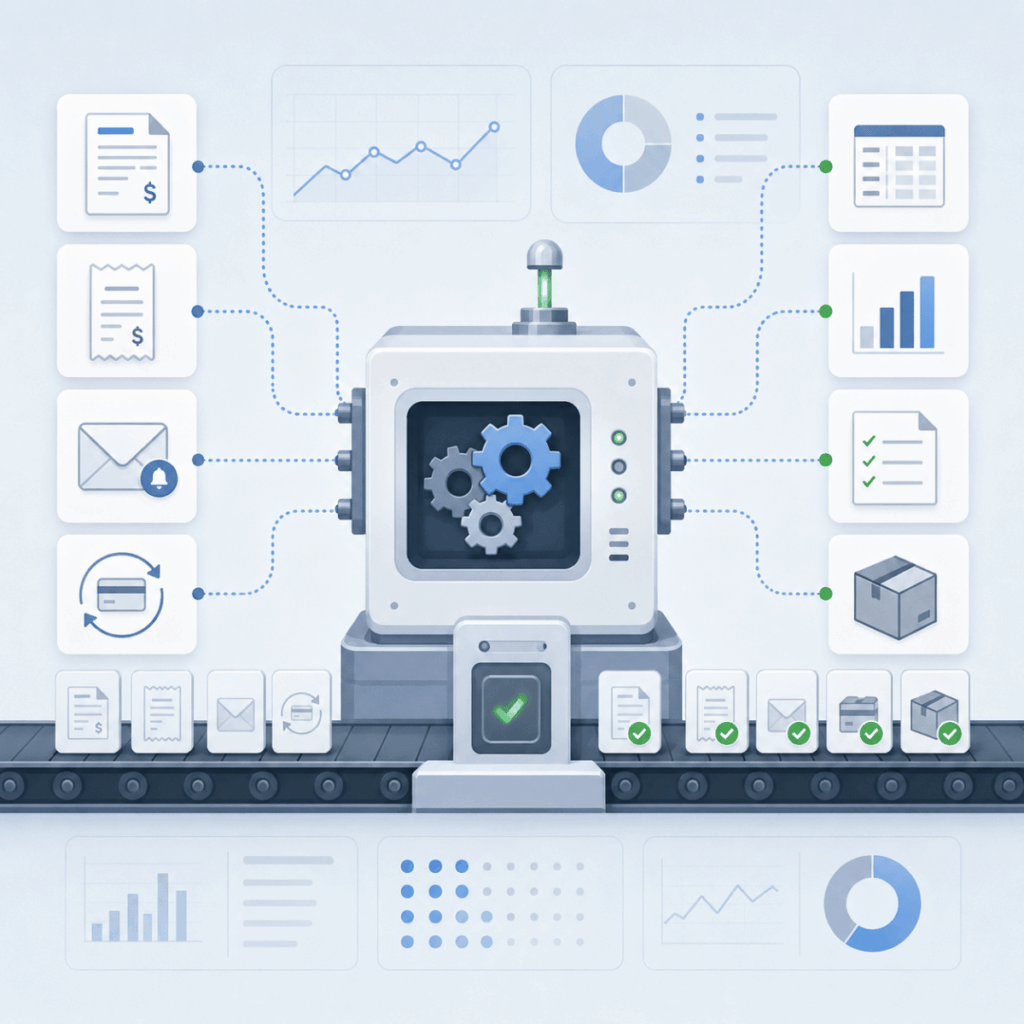

Protect the sales judgment layer
The sales judgment layer is different.
That is where the owner has to stay awake.
This is where the business decides who it wants, what it sells, why it matters, how it prices, what it protects, and what it refuses.
This is where margin lives.
This is where capacity gets protected.
This is where the business avoids confusing revenue with progress.
Because not all revenue is good revenue.
Some revenue shows up wearing a nice jacket and then starts breaking furniture.
A transaction system will process the order.
Sales judgment decides whether that order is worth wanting.
That is the difference.
The actual mistake
The mistake is not automation.
Automation is not the villain here. Put down the tiny pitchfork.
The mistake is confusing automation of the transaction with automation of sales.
That mistake makes owners think they have strengthened the sales function when they have really just cleaned up the paperwork after a decision has already been made.
That is useful.
But it is not the same thing.
A business can have smooth transactions and weak sales.
A business can have beautiful dashboards and poor customer judgment.
A business can process orders quickly and still be accepting the wrong work at the wrong margins from the wrong customers.
That is not sales automation.
That is a very efficient way to become busier and less profitable.


The machine can process the order. It cannot judge the order.
Transactions are not sales.
Transactions belong to accounting, bookkeeping, operations, fulfillment, and reporting.
Sales belongs to the market, the customer, the margin, the offer, the timing, the capacity, and the judgment of the business owner.
Automate the transaction layer.
Protect the sales judgment layer.
The machine can process the order.
It cannot decide whether the order was worth wanting.